
Work · Wildlife conservation
Real-time rhino monitoring across a 32,000-acre conservancy.
A rhino monitoring system for Borana Conservancy in Kenya. Rangers log sightings in the field, and the system raises an alert when an animal has not been seen.
When a rhino goes unseen, days matter
Before
Sightings, medical histories and alerts were kept in paper logbooks, radio calls and separate spreadsheets. There was no real-time picture of the population, which is dangerous when an animal has not been seen for several days and may be injured, trapped or targeted by poachers.
What we built
A web app for the conservancy's rhino monitoring programme. Rangers log sightings from their phones, managers follow population status on a live dashboard, and alerts escalate automatically when an animal is overdue.
[Client quote, one or two sentences.]
What rangers and managers see
Live dashboard
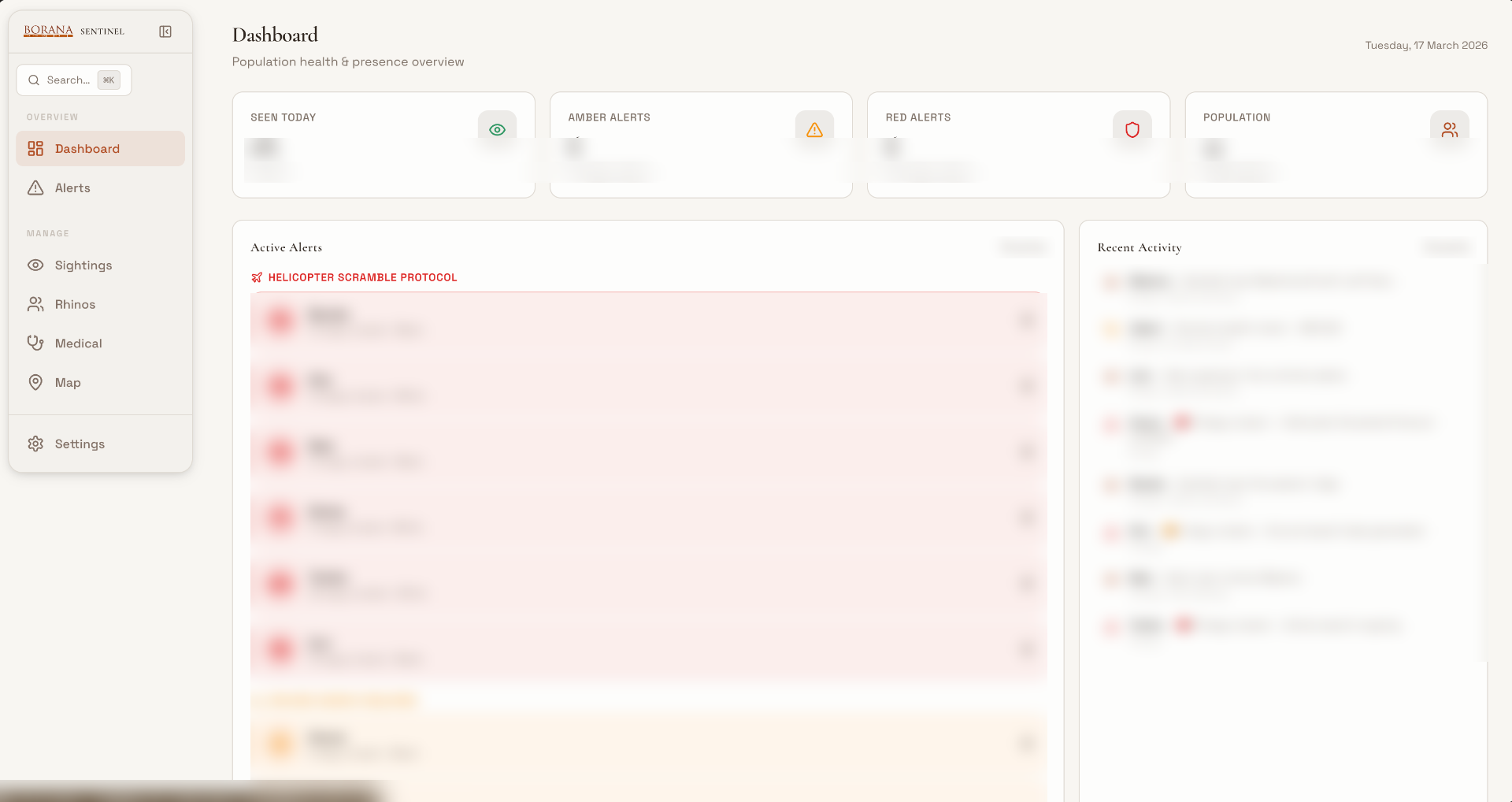
A population overview with green, amber and red status, sighting recency at a glance and a live activity feed.
Rhino profiles
Identification, ear-notch codes, photo ID, sighting history with GPS, medical records and family tree.
Sighting map
A map of sightings with markers coloured by alert status, to spot territories and animals outside their normal range.
Field data entry
Mobile forms for sightings with GPS and photos, medical records, new animals and offspring.
Alert escalation
Animals move from green to amber to red as time since the last sighting passes the threshold for their species.
Search
Find any animal by name, ear-notch code or species, filtered by alert level.
From logbooks to live data
| Area | Before | After |
|---|---|---|
| Sighting records | Paper logbooks | A permanent digital record with GPS and photos |
| Alerts | Memory and manual cross-checking | Automatic escalation by time since last sighting |
| Veterinary history | Fragmented paper notes | A full medical history for each animal |
| Shift handovers | Verbal radio updates | A live activity feed and dashboard |
Talk to us about a system like this.
Tell us what your team does by hand today. The first call takes 30 minutes, and we'll say whether we can help.
Book a call